Right to Repair 2025: The Laws Are Here — Now Comes the Hard Part
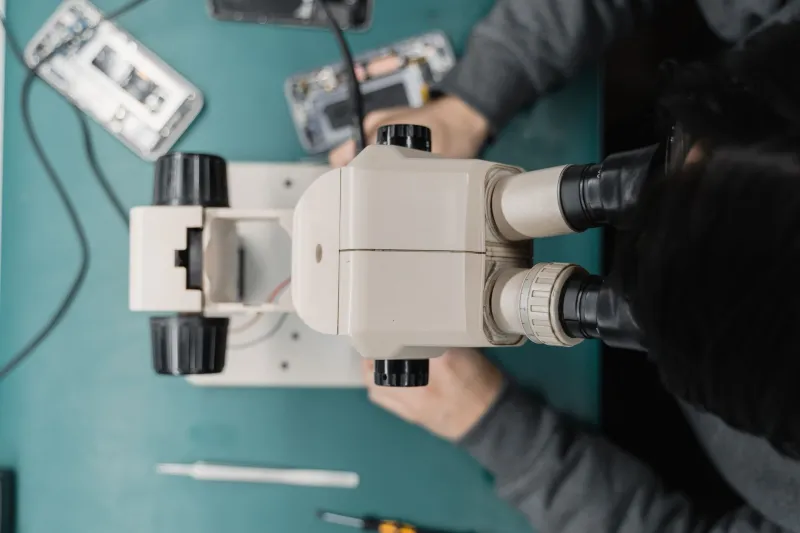
For nearly a decade, the right-to-repair movement occupied a peculiar position in American policy discourse: broadly popular with consumers, aggressively opposed by manufacturers, and largely stalled in legislative chambers. That dynamic has shifted measurably in 2025. A cluster of state-level laws, combined with evolving Federal Trade Commission guidance, has introduced genuine legal obligations for manufacturers that were, until recently, under no compulsion to cooperate with independent repair.
The question now is not whether these laws exist — they do — but whether they deliver what advocates have long promised: longer-lasting devices, lower repair costs, and a repair ecosystem capable of competing with manufacturer-authorized service channels.
What the 2025 Legislative Landscape Actually Requires
Minnesota's Digital Fair Repair Act, which took effect in 2024 and whose enforcement mechanisms matured into 2025, set a meaningful precedent. It requires manufacturers of consumer electronics sold in the state to make available to independent repair shops and individual consumers the same diagnostic tools, parts, and documentation provided to authorized service providers — at fair and reasonable prices.
Colorado extended similar protections specifically to agricultural equipment, a significant development given the long-running conflict between farmers and manufacturers like John Deere over software-locked machinery. New York's Digital Fair Repair Act, passed in 2023 and progressively strengthened, has served as a national template.
At the federal level, the FTC has intensified scrutiny of warranty practices that attempt to void coverage when consumers use third-party repair services — a tactic that the agency has characterized as potentially unlawful under the Magnuson-Moss Warranty Act for years, but has only recently begun enforcing with meaningful consistency.
The cumulative effect is that manufacturers operating in the US market can no longer treat repair obstruction as a cost-free business strategy in the way they could as recently as 2022.
How Major Manufacturers Are Responding
Responses from the industry have been uneven, ranging from genuine structural change to what critics describe as compliance theater.
Apple, which spent years as the right-to-repair movement's most prominent antagonist, launched its Self Service Repair program in 2022 and has incrementally expanded it. By 2025, the program covers a broader range of iPhone and Mac models and provides access to genuine Apple parts, tools, and repair manuals. However, critics including repair advocacy organization iFixit note that Apple's parts pairing requirements — a practice by which replacement components must be software-authenticated to the specific device — continue to limit the functionality of independent repairs in ways that go beyond what is technically necessary.
"Parts pairing is the new repair obstruction," said Gay Gordon-Byrne, executive director of the Repair Association, in a statement earlier this year. "The law says you have to provide parts. It doesn't yet say those parts have to work without manufacturer permission."
Samsung has made more substantive concessions in the US market, partnering with iFixit to distribute parts and repair guides for a growing range of Galaxy devices. Microsoft has similarly expanded its Surface repair documentation and parts availability, a notable shift for a company whose early Surface hardware was notorious among repair technicians for its aggressive use of adhesive and proprietary fasteners.
John Deere, facing both legislative pressure and a high-profile FTC investigation, signed a memorandum of understanding with the American Farm Bureau in 2023 committing to expanded repair access — though independent repair advocates have raised concerns about whether implementation has matched the letter of that commitment.
What Consumers Can Now Actually Do
The practical expansion of consumer repair options in 2025 is real, if uneven across device categories.
For smartphones, the availability of genuine manufacturer parts through third-party channels has improved substantially for Apple and Samsung flagship devices. Screen replacements, battery swaps, and certain camera module repairs are now feasible for a technically confident consumer with access to the right tools. Repair guides from iFixit, combined with parts from manufacturer programs, have reduced the cost of a DIY battery replacement on recent iPhone models to approximately $50 to $70 in parts — compared to $99 or more through Apple's own service channel.
For laptops, the picture is more complicated. Framework Computer, a company built explicitly around repairability, has demonstrated that modular laptop design is commercially viable, and its growing sales figures have not gone unnoticed by larger competitors. Dell and Lenovo have both improved parts availability for certain business-line laptops, though consumer-tier devices remain more restricted.
For home appliances — a category covered under some state frameworks — access to diagnostic software and wiring schematics has improved, though the repair technician shortage in many US markets means that parts availability alone does not always translate into affordable service.
The Repair Ecosystem Is Rebuilding — Slowly
Legislation creates conditions; it does not instantly generate infrastructure. The independent repair ecosystem in the United States contracted significantly during the period of manufacturer-imposed restrictions, and rebuilding it takes time.
Vocational training programs that include electronics repair have seen renewed enrollment in states where repair legislation has passed, according to data from the Repair Association. Several community colleges in Minnesota and Colorado have introduced or expanded electronics repair curricula in direct response to anticipated demand.
The secondary market for certified refurbished devices is also expanding. Companies like Back Market, which sources and resells professionally refurbished electronics, reported year-over-year growth in US sales through 2024, a trend that improved parts availability only accelerates.
What Still Needs to Change
Right-to-repair advocates are candid that 2025 represents a beginning rather than a conclusion. Several significant gaps remain.
Software locks and parts pairing represent the frontier of the next legislative battle. Physical access to parts is meaningful only if the software running on a device does not artificially degrade functionality when non-manufacturer components are installed — a practice that several manufacturers continue to employ.
Enforcement mechanisms vary significantly by state, and manufacturers with sufficient legal resources have demonstrated a willingness to interpret compliance obligations narrowly. Federal legislation that creates a uniform national standard remains the movement's long-term objective, and its prospects in the current Congress are uncertain.
Nevertheless, the trajectory is clear. The era of consequence-free repair obstruction is ending. For American consumers who have watched device lifespans shrink and repair costs climb, that shift — however incremental — represents a meaningful change in direction.