Smart Home, Dumb Situation: How Competing Ecosystems Are Costing You More Than You Realize
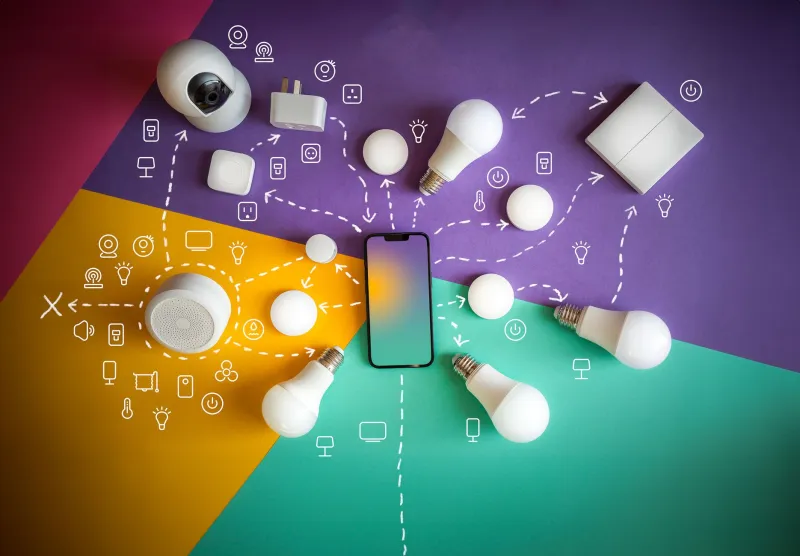
The pitch was irresistible. A home that learns your preferences, adjusts its own temperature, locks its own doors, and dims its own lights — all managed from a single app on your phone. For millions of American households, that vision sparked a spending spree. Smart speakers, connected thermostats, Wi-Fi-enabled locks, and app-controlled bulbs flew off shelves throughout the late 2010s and into the current decade.
What nobody advertised was the fine print: the ecosystem wars were already underway, and consumers were about to become the primary casualties.
Today, the average US smart home owner juggles between three and five separate apps to manage their connected devices. Many own hardware that no longer receives software updates. Some have discovered, often after a company shutdown or a product discontinuation announcement, that their "smart" devices are now effectively inert. The fragmentation problem is not a minor inconvenience — it is a structural flaw baked into how the smart home industry developed, and it is costing American households real money.
How the Ecosystem War Started — and Never Ended
The smart home market did not evolve through cooperation. It evolved through competition, with Amazon, Google, Apple, Samsung, and a rotating cast of smaller players each betting that their platform would become the dominant hub. Amazon pushed Alexa. Google answered with its Home ecosystem. Apple cultivated HomeKit with its characteristic emphasis on privacy and tight hardware integration. Samsung built SmartThings. Each company had a compelling reason to wall off its garden.
The commercial logic is straightforward: a consumer who buys five Alexa-compatible devices is far more likely to buy a sixth than to defect to Google Home. Lock-in is not an accident — it is the business model.
The consequence for consumers is a landscape littered with incompatible protocols, orphaned hardware, and devices that communicate beautifully within a single brand's universe and go completely silent the moment you introduce a competitor's product.
The Protocol Problem: Matter Promised Everything, Delivered Complexity
The industry's most ambitious attempt at a solution arrived in the form of Matter, a connectivity standard backed by Apple, Google, Amazon, Samsung, and the Connectivity Standards Alliance. Announced with considerable fanfare, Matter was positioned as the Rosetta Stone of smart home technology — a universal language that would finally allow devices from different manufacturers to communicate without friction.
The reality has been more complicated. Matter adoption has been uneven. Many legacy devices remain incompatible, requiring consumers to maintain older hubs or bridges alongside any Matter-compliant hardware. Thread, the underlying network protocol that Matter relies on for low-power devices, requires a Thread border router — yet another piece of hardware that not every home has in place.
Experts in the connected-device space note that Matter has meaningfully improved the situation for new purchases, but has done little to address the installed base of hundreds of millions of devices already deployed in American homes. The transition is gradual at best, and for consumers who invested heavily in proprietary ecosystems during the 2015–2022 period, the bridge to interoperability remains expensive to cross.
Cloud Dependency: The Hidden Vulnerability Nobody Talks About
Beyond protocol incompatibility, there is a second structural problem that receives far less attention: the overwhelming reliance on cloud infrastructure to make smart home devices function at all.
A significant portion of consumer smart home products are not truly autonomous. They depend on a manufacturer's cloud servers to process commands, authenticate users, and deliver firmware updates. When that cloud infrastructure disappears — through a company bankruptcy, a product line discontinuation, or a simple business pivot — the hardware becomes non-functional regardless of its physical condition.
This is not a hypothetical concern. Insteon, once a well-regarded smart home platform, abruptly shut down its servers in 2022, leaving customers with hardware that could no longer be controlled remotely. Belkin discontinued its Wemo line of smart home products in 2024. Numerous smaller brands have executed similar quiet exits, leaving consumers holding devices that are physically intact but operationally dead.
Local processing — the ability for a device to operate without communicating with an external server — is the antidote, but it remains far less common than cloud-dependent architectures. Platforms such as Home Assistant, which runs on local hardware and supports a vast library of integrations, represent a different philosophy: one that prioritizes consumer autonomy over corporate convenience.
Platform Scorecard: Flexibility, Cost, and Longevity
For consumers attempting to make informed purchasing decisions, the following framework offers a comparative lens across the major platforms currently operating in the US market.
- Flexibility: Moderate. Broad device compatibility, but deeply tied to Amazon's cloud infrastructure and commercial priorities.
- Cost: Low entry point; Echo hardware is frequently discounted. Long-term costs accumulate through subscriptions and hardware refresh cycles.
- Longevity Risk: Medium-High. Amazon has discontinued multiple Alexa-adjacent products and features in recent years.
Google Home
- Flexibility: Moderate. Nest hardware integrates well internally; third-party compatibility has improved with Matter but remains inconsistent.
- Cost: Mid-range. Nest devices carry a premium price.
- Longevity Risk: Medium-High. Google's history of discontinuing consumer products — Google Stadia, Nest Secure, and others — warrants caution.
- Flexibility: Low-Moderate. The most restrictive ecosystem in terms of compatible hardware, though security and local processing capabilities are strong.
- Cost: High. Apple hardware commands a significant premium.
- Longevity Risk: Low. Apple's track record of long-term software support is the strongest among major platforms.
Samsung SmartThings
- Flexibility: High. Broad compatibility across device types and brands.
- Cost: Mid-range.
- Longevity Risk: Medium. SmartThings has undergone multiple strategic pivots, which introduces uncertainty.
Home Assistant (Self-Hosted)
- Flexibility: Very High. Supports thousands of integrations; operates locally without cloud dependency.
- Cost: Low ongoing cost; requires upfront technical investment.
- Longevity Risk: Very Low. Open-source foundation and an active community insulate it from corporate discontinuation.
A Practical Framework for Building Without Betting on One Company
The most resilient smart home strategy in 2025 is not one that picks a winner — it is one that minimizes dependence on any single company's continued goodwill.
First, prioritize Matter-certified devices for all new purchases. While Matter is not a complete solution, it represents the most credible path toward hardware that will remain interoperable as the market evolves.
Second, favor devices that support local processing or that can function without cloud authentication. Before purchasing, research whether the device will continue to operate if the manufacturer's servers go offline.
Third, treat your hub as the most consequential decision in your ecosystem. A hub built on open standards — or one that you control locally — is inherently more durable than a proprietary hub that depends on a corporate roadmap.
Fourth, maintain skepticism toward any platform that makes migration deliberately difficult. Vendor lock-in is a business strategy, not a technical necessity. Companies that make it easy to export your data and move your devices are demonstrating a fundamentally different relationship with their customers.
The Broader Implication
The smart home market's fragmentation problem is ultimately a consumer protection issue dressed in the language of technology. American households have collectively invested billions of dollars in connected devices, and a significant portion of that investment has already been rendered obsolete — not through hardware failure, but through deliberate commercial decisions made by technology companies pursuing market dominance.
Until regulatory pressure or genuine market demand forces greater interoperability, the burden of navigating this landscape falls on individual consumers. The good news is that the tools for building a resilient, flexible smart home do exist. They simply require more deliberate decision-making than the marketing materials typically suggest.