One Port, Endless Confusion: The Truth Behind USB-C's Broken Promise
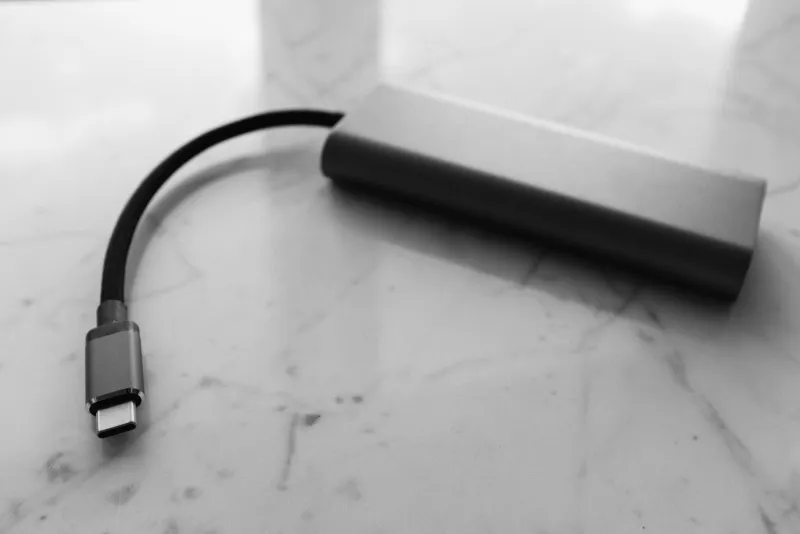
Open any drawer near a charging station in the average American household and you will likely find a tangle of cables that all look essentially the same: slim, oval connectors, reversible plugs, identical black or gray braiding. Pick one up at random and try to charge your laptop at full speed, transfer a large file, or connect to a 4K monitor, and there is a reasonable chance it will fail — or worse, work just well enough to mislead you about why performance is degraded.
This is the USB-C paradox. The connector that was supposed to end cable proliferation has, in many ways, compounded it. Understanding why requires a look at how the specification was designed, how manufacturers have interpreted it, and why the gap between marketing language and technical reality has proven so stubbornly difficult to close.
A Standard Built on Ambiguity
USB-C refers specifically to a physical connector shape — the small, symmetrical, oval port now found on virtually every modern laptop, Android smartphone, and, since the European Union's mandate took effect, iPhone. What it does not specify is the protocol running through that connector, the power delivery capacity, or the data transfer speed. Those variables are governed by entirely separate specifications, and the combinations are staggering.
A USB-C cable might carry USB 2.0 data speeds — the same bandwidth available in the late 1990s — while looking physically identical to a cable capable of Thunderbolt 4 speeds that are more than 200 times faster. A cable rated for 60-watt power delivery will charge a MacBook Air at a reasonable rate but will throttle a power-hungry gaming laptop that requires 100 watts or more. A cable that transfers data flawlessly may carry no video signal whatsoever.
The USB Implementers Forum, the industry body that governs the specification, has released successive standards — USB 3.2, USB4, and various sub-variants — each adding capability while preserving backward compatibility with the same physical form factor. The result is a specification matrix so complex that even engineers working in the field sometimes require reference charts to keep it straight.
How Manufacturers Exploit the Gray Areas
The flexibility built into USB-C has been commercially useful for manufacturers in ways that do not necessarily benefit consumers. A cable manufacturer can produce a product that is technically compliant with the USB-C specification while delivering a fraction of the performance a buyer would reasonably expect.
Labeling requirements have historically been lax. Until the USB Implementers Forum introduced its Certified USB logo program and the associated cable certification process, there was no reliable way for a consumer to distinguish a high-performance cable from a low-grade one without specialized testing equipment. Even today, certification compliance is voluntary, and the retail market — particularly on major e-commerce platforms — is saturated with uncertified products bearing logos that imply compliance they have not earned.
Power delivery is where the consequences become most tangible. The USB Power Delivery specification allows for charging at up to 240 watts under the latest revision, but a cable must be built with appropriate wiring gauge and internal electronics to safely handle that load. Cables that are not rated for higher wattage but are sold without clear labeling can, in the best case, simply charge slowly. In documented worst cases, they have caused device damage or fire hazards — a problem serious enough that Google engineer Benson Leung became something of a folk hero in tech circles for systematically testing and publicly reviewing cables on Amazon that failed basic safety standards.
Thunderbolt, Intel's high-bandwidth protocol that uses the USB-C connector on modern hardware, adds yet another layer of complexity. Thunderbolt 4 cables support 40 gigabits per second of bandwidth and can daisy-chain monitors, external storage, and docking stations simultaneously. They also cost significantly more to manufacture correctly. A cable that looks identical but lacks Thunderbolt certification will simply fail to negotiate the protocol, leaving users with a slower connection and no obvious explanation for why.
The EU Mandate's Limitations
The European Union's requirement that consumer electronics sold in member states include USB-C charging ports was broadly celebrated as a win for standardization. The United States has not enacted equivalent legislation, though the mandate has had downstream effects on products sold in the American market, since most manufacturers prefer a unified global hardware design.
However, mandating the port does not mandate the protocol. A manufacturer can install a USB-C port that supports only USB 2.0 speeds and minimal power delivery while remaining fully compliant with the letter of the regulation. Several budget smartphones have done exactly this, installing USB-C connectors that perform no better than the Micro-USB ports they replaced. The connector is standardized; the experience is not.
A Practical Buyer's Guide to USB-C Cables
Given this landscape, how should American consumers approach cable purchases? A few principles can help separate reliable products from expensive or dangerous impostors.
Look for USB-IF certification. The USB Implementers Forum's certified cable program provides the most reliable third-party assurance of compliance. Look for the certified logo or verify certification status on the USB-IF website before purchasing.
Match the cable to the task. For charging a laptop at full speed, verify that the cable is rated for at least the wattage your device requires — 100W for most modern laptops, higher for performance machines. For data transfer or monitor connections, confirm the cable's USB version (USB4 or Thunderbolt for maximum performance). For basic smartphone charging, a certified 60W cable is sufficient for most use cases.
Be skeptical of very low prices. A Thunderbolt 4 cable legitimately costs between $20 and $40 from reputable manufacturers such as Apple, Belkin, and Cable Matters. A listing offering equivalent claimed specifications for $5 is almost certainly misrepresenting its capabilities.
Check the packaging for specific specifications. Legitimate high-performance cables will state their data transfer speed, power delivery wattage, and protocol support explicitly. Vague language such as "fast charging compatible" or "high speed" without numerical specifications is a reliable signal of a low-quality product.
Dispose of uncertified cables. If you have cables of unknown origin in your drawer — particularly older ones purchased from discount retailers or included with non-name-brand devices — they may not meet current safety standards. The marginal inconvenience of replacing them is worth the reduction in risk.
The Longer Road to Simplicity
USB-C's underlying promise remains sound. The physical connector is genuinely excellent — durable, reversible, and compact. The protocols it can carry are powerful enough to handle virtually any consumer electronics use case for the foreseeable future. The problem has never been the technology itself but rather the industry's unwillingness to enforce meaningful transparency at the point of sale.
Until labeling requirements become more stringent — either through regulatory action or sustained consumer pressure — the cable drawer will remain a graveyard of lookalike products that perform nothing alike. The standard exists. The simplicity it promised is still waiting to arrive.