GPU Prices Are Climbing Again — Here's the Supply Chain Crisis Fueling the 2025 Surge
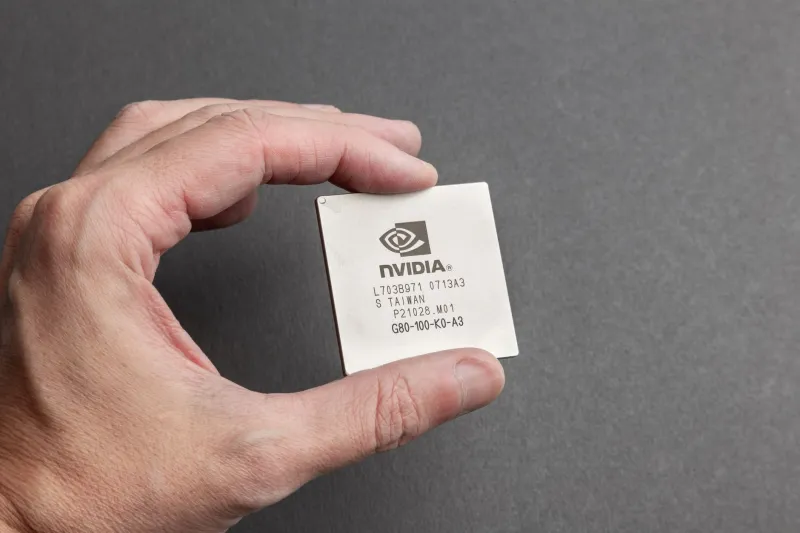
If you have been watching GPU prices on Newegg or Amazon over the past several months, you may have noticed something unsettling: the numbers keep moving in the wrong direction. What began as a data center spending surge has rippled outward, squeezing supply chains and pushing consumer-grade graphics cards into price territory that feels eerily reminiscent of the 2021 crypto mining frenzy. This time, however, the underlying dynamics are more structurally entrenched — and the relief may not arrive as quickly as shoppers hope.
The AI Demand Explosion That Started It All
The immediate catalyst for today's GPU crunch is not cryptocurrency speculation or a pandemic-era supply shock. It is artificial intelligence infrastructure, and the scale of investment is staggering. Hyperscale cloud providers — Amazon Web Services, Microsoft Azure, and Google Cloud among them — have been acquiring AI accelerators at a pace that has outstripped semiconductor manufacturers' ability to respond. NVIDIA's H100 and the newer H200 Tensor Core GPUs remain the gold standard for large language model training, and lead times for these chips have stretched from weeks into months.
The downstream effect on consumer hardware is significant. NVIDIA, AMD, and Intel all share overlapping manufacturing capacity at foundries like TSMC and Samsung. When enterprise demand for high-margin AI accelerators spikes, foundry allocation naturally tilts toward the products generating the greatest revenue per wafer. Consumer-grade RTX and Radeon cards, while still produced, occupy a lower priority in the production queue.
"The foundry ecosystem is essentially a finite resource," explained one semiconductor analyst who spoke with TechInfo Hub on background. "When a single customer is ordering tens of billions of dollars' worth of advanced-node chips, every other product line feels the pressure."
Geopolitical Tensions Tightening the Screws
Manufacturing constraints alone do not fully explain the 2025 price environment. Geopolitical friction between the United States and China has introduced a layer of uncertainty that suppliers are pricing directly into their margins.
Export controls enacted by the U.S. Commerce Department have restricted NVIDIA's ability to sell its most capable AI chips to Chinese customers. In response, NVIDIA developed watered-down variants — the H20 and L20 — to maintain some access to that market. However, those restrictions have not reduced Chinese demand; they have redirected it. Chinese technology companies have accelerated domestic chip development efforts and, simultaneously, have been stockpiling compliant hardware at elevated volumes, further stressing global supply.
Additionally, Taiwan's central role in advanced semiconductor fabrication remains a geopolitical variable that financial markets and procurement teams cannot ignore. TSMC manufactures the overwhelming majority of leading-edge chips used in AI accelerators and premium consumer GPUs. Any disruption to operations in the Taiwan Strait — even a perceived increase in regional tension — tends to trigger preemptive purchasing behavior among large institutional buyers, which tightens spot market availability and inflates prices for everyone else.
How Price Trends Have Shifted in Practical Terms
Looking at historical pricing data aggregated from major U.S. retailers, the trajectory is clear. Mid-range consumer GPUs — the segment most relevant to American gamers and creative professionals — have seen average selling prices rise between 12 and 22 percent compared to this time last year, depending on the specific tier. High-end cards have experienced even steeper increases, with some models trading above their manufacturer suggested retail prices for the first time since 2022.
The used market, which historically offers relief during new-card shortages, has tightened correspondingly. Platforms like eBay and Facebook Marketplace are showing elevated ask prices for previous-generation hardware as buyers who cannot secure new stock turn to secondary sources.
For small and mid-sized American businesses investing in local AI inference hardware — a growing segment as companies seek to keep sensitive data off public cloud platforms — the math has become considerably less favorable. A workstation that might have been budgeted at $8,000 twelve months ago can now run $11,000 or more with comparable GPU specifications.
What Manufacturers Are Saying (and Not Saying)
Public statements from GPU vendors have been carefully calibrated. NVIDIA's leadership has consistently framed supply constraints as a temporary mismatch between unprecedented demand and production ramp-up timelines. AMD has signaled expanded capacity investments but has been measured about specific timelines. Intel's Arc GPU line remains a relatively minor player in the high-performance segment, though the company's broader foundry ambitions could eventually introduce meaningful competition.
None of these companies have publicly committed to consumer price reductions in the near term — a telling silence that procurement professionals and retail analysts interpret as an acknowledgment that current price levels are sustainable from a business perspective.
When Should You Buy — and When Should You Wait?
For readers navigating this environment, the decision calculus depends heavily on use case and timeline.
Buy now if: Your current hardware is failing or genuinely insufficient for your workload, you are a creative professional whose productivity is directly constrained by GPU performance, or you have identified a specific card at or near MSRP through a reputable retailer.
Consider waiting if: Your existing GPU remains functional, you are targeting the high-end segment where price premiums are most pronounced, or your purchase timeline extends into late 2025 or 2026. Analysts broadly expect that new manufacturing capacity coming online at TSMC's Arizona facilities and Samsung's expanded nodes will begin relieving pressure in the latter half of 2025, though meaningful consumer price normalization may not materialize until 2026.
One practical strategy worth considering: set price alerts through tools like CamelCamelCamel for Amazon listings or use GPU price tracking aggregators. Retail pricing in this environment is not static, and brief windows of MSRP availability do occur, particularly around major sales events.
The Bigger Picture for American Tech Consumers
The 2025 GPU price surge is not an isolated anomaly. It reflects a broader structural shift in which artificial intelligence infrastructure has become the dominant driver of semiconductor demand, fundamentally altering the economics of consumer hardware. For American tech enthusiasts accustomed to a predictable cycle of performance improvements at stable or declining prices, this represents a meaningful recalibration of expectations.
The good news is that the underlying forces — while powerful — are not permanent. Capacity investments are underway, domestic semiconductor production through the CHIPS Act is gradually maturing, and competition in the AI accelerator space is intensifying. The question is not whether relief will come, but how long consumers will need to navigate this elevated-cost environment before it does.
In the meantime, informed purchasing decisions and realistic budget planning remain the most reliable tools available to American buyers facing a market that is, for now, firmly in the seller's favor.